
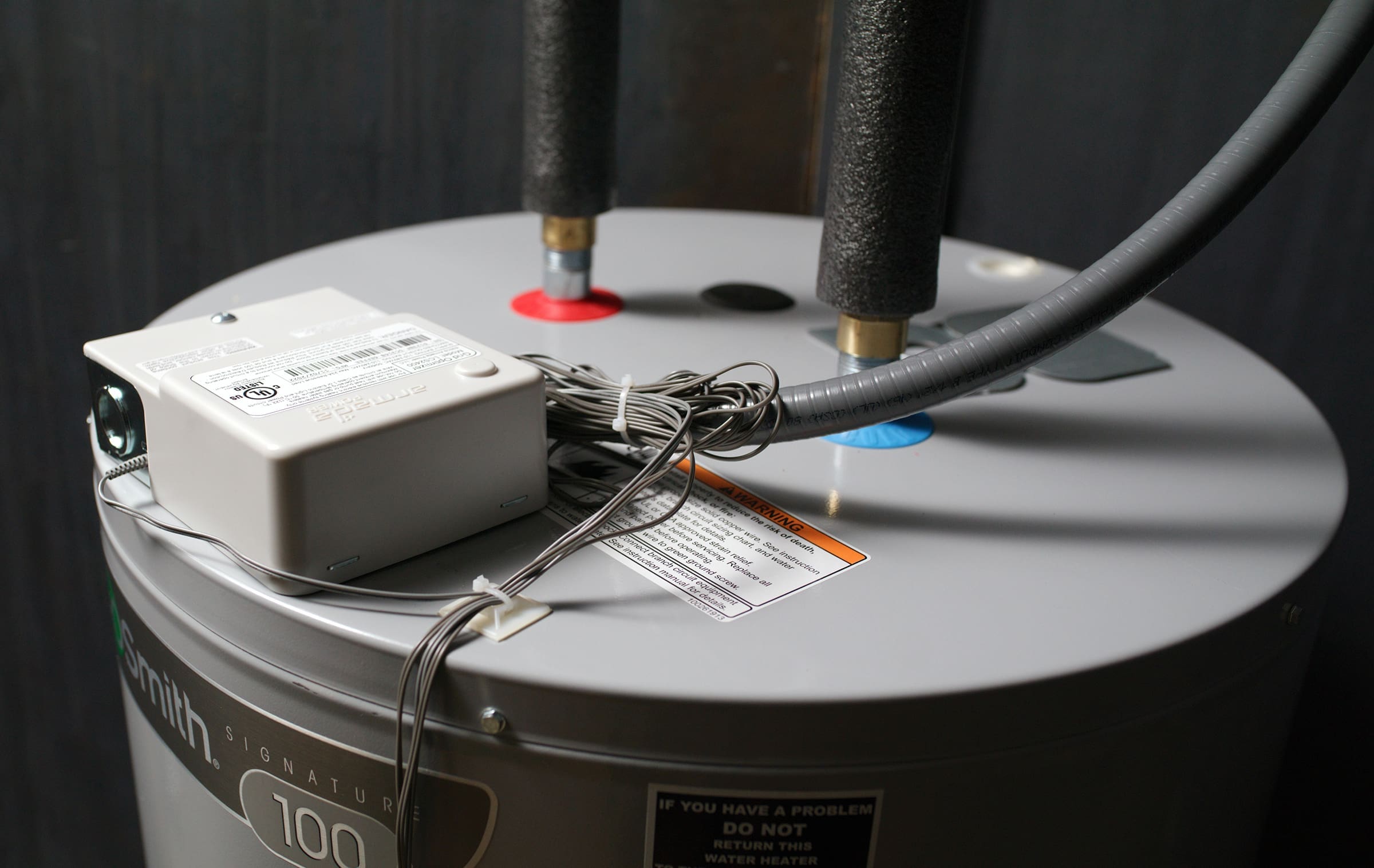
The Armada Power Optimizer and Electric Resistance Water Heaters
Updated on January 16, 2026
Quick Summary
Electric resistance water heaters heat household water using one or two electric heating elements and thermostatic controls within an insulated tank — a common technology with tens of millions of units installed nationwide.
Armada Power’s article explains the basic components and operation of these heaters and shows how its Optimizer hardware and Fleet Commander platform can transform ordinary units into smart assets for data, control, and easy O&M without affecting hot water availability.
Electric Resistance Water Heater Basics
The US Energy Information Administration reports that there are 57 million electric resistance water heaters in the United States, making them the second most prevalent water heater type in use behind natural gas. Electric water heaters are so popular because they are typically less expensive and do not require gas vents, which means they can be installed in areas where venting is impossible.

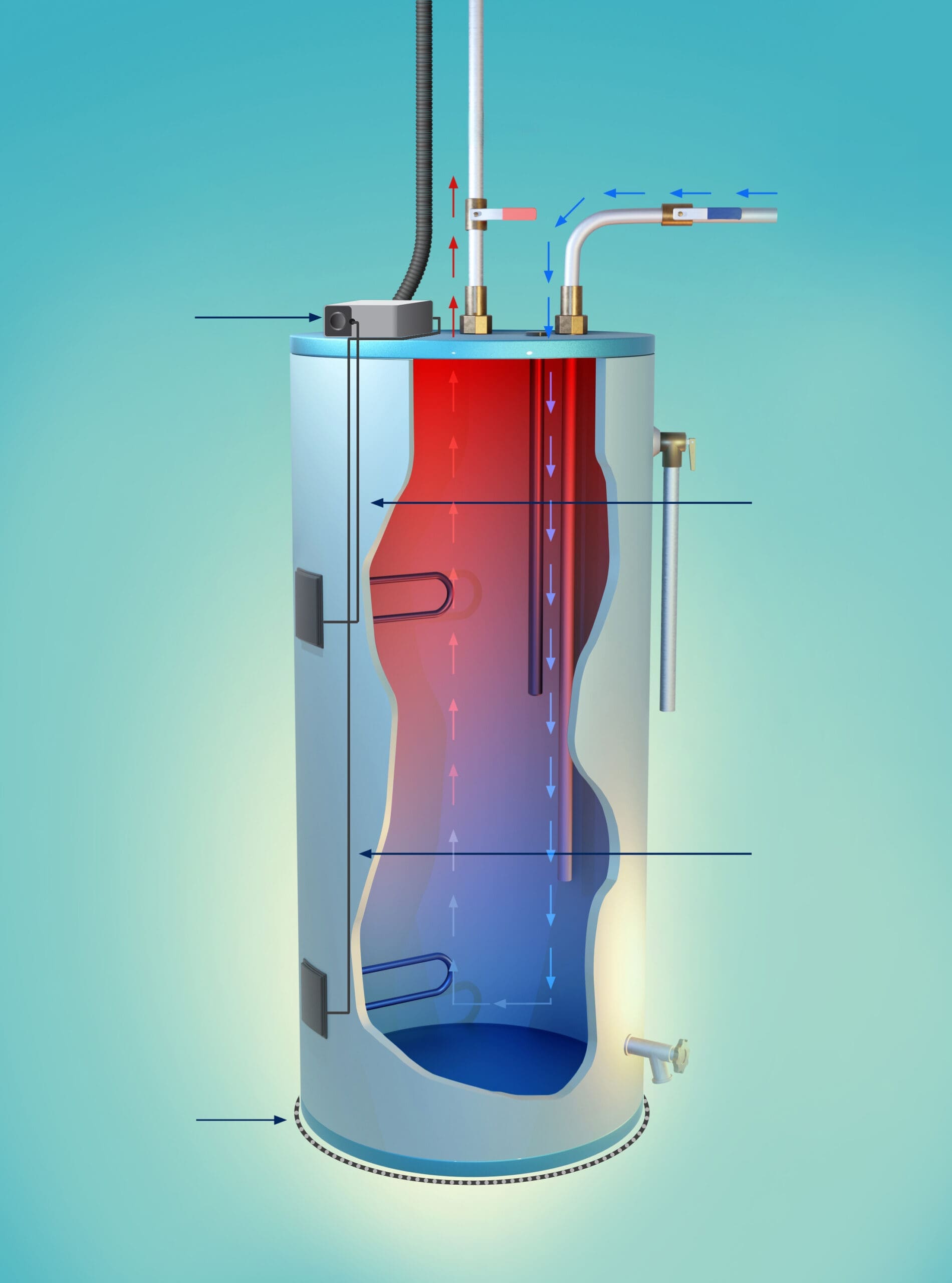
The Process
- Cold water supply temperatures vary by region and season.
- Hot water exits the top of the tank and is refilled with cold water at the bottom of the tank.
- The electrical supply typically connects at the top of the tank.
- Electricity is sent to the top and bottom elements, which are managed by a thermostat at each location.
- Temperatures for the top and bottom of the tank are set at each thermostat location.
- Water is heated when the temperature reaches the lower set point until the temperature reaches the upper set point.
- The anode rod attracts corrosive elements in the water to protect the tank itself from corrosion.
The Components
- A Tank
- Two Thermostats
- Two Heating Elements
- A Power Source
- Water Inlet Pipe
- A Water Outlet Pipe
- An Anode Rod
- A Drain Valve
Electric Resistance Water Heaters
Untapped Load – Huge Opportunity
There are 57 million electric water heaters with 257 gigawatts of connected load and between 17 and 57 gigawatts of dispatchable load. But what does that mean?
The Armada Power Optimizer turns ordinary electric resistance water heaters into extraordinarily smart appliances that communicate in real-time with Armada’s Fleet Commander platform and the Armada Power App to create a flexible year-round load management solution.
Armada Power Optimizer
Hardware. Active Load Management Controls and Telemetry
U.S.-manufactured smart device features revenue-grade energy monitoring, temperature measurements, and leak detection, and maintenance alerts. Local frequency sensing for droop control and synthetic inertia enable utility services. The simple installation on top of the water heater takes less than 30 minutes and requires no plumbing modifications.
Armada Power Fleet Commander
Platform. Grid Scale Fleet Management
Virtual Power Plant and Utility Grid Services control built to manage millions of devices on a local, regional or ISO level. Fleet Commander creates a centralized grid-stabilization resource by linking customers’ electric water tanks to the cloud for flexible load management. Algorithms use real-time temperature measurements and power consumption data to learn usage patterns and provide powerful insight control.
Armada Power Mobile Application
Software. Scheduling, Maintenance, and Energy Savings
The Armada Power Mobile Application lets residents manage their water heater anytime and anywhere. Powerful tools provide time-of-use and vacation scheduling, maintenance, and leak alerts, as well as usage insights designed to make saving energy and money easier than ever.
A Smart Switch for Water Heaters.
- The Armada Power Optimizer is Installed in line with the water heater’s incoming power supply. It connects to the internet and the Armada Fleet Commander via a secure Wi-Fi or cellular connection.
-
- The Optimizer manages the on/off power supply so that water heating occurs during optimized grid times.
- The Optimizer does not alter the availability of hot water or the amount of power necessary to maintain hot water.
- The Optimizer utilizes two temperature thermistors and an optional leak detection sensor.
-
- Thermistors are placed against the tank at both the top and bottom thermostat locations.
- The leak sensor is placed in the drip pan or on the ground under the tank.
- Both are low-voltage sensors that read data only and are independent of the tank operations.
- The tank’s internal controls are not altered in any way.
The Components
- The Optimizer
- Two Thermistors
- An Optional Leak Sensor

Find out more about Armada Power’s smart electric water heater technology.
Armada Power’s smart water heater technology empowers utilities, multi-family communities, and residents to achieve a range of goals—from cost savings and demand response to leak detection and beyond. Our technology leads the way in connectivity and has the power to deliver energy savings of 17-57 gigawatts of dispatchable load, making it a valuable grid resource that is easy to install and easy to use.
FAQs
Q1. What is an electric resistance water heater?
An electric resistance water heater uses electrical energy passing through heating elements to heat water stored in an insulated tank.
Q2. How does an electric resistance water heater work?
Cold water enters the tank, electric elements heat it, and thermostats control when and how long the elements are energized to maintain set temperature.
Q3. What are the main components of an electric water heater?
Typical components include the tank, two thermostats, two heating elements, inlet and outlet pipes, an anode rod, and a drain valve.
Q4. Can electric water heaters participate in grid programs?
Yes — when paired with smart retrofit hardware like Armada Power’s Optimizer and connected to platforms like Fleet Commander, they can provide data, control, and participate in flexible load management.
Q5. Does adding smart control affect hot water availability?
No — smart retrofit controls manage on/off power timing without changing the internal tank controls or reducing available hot water.
